
Revenue and financial summary
Revenue, expenses, profit, debt, average receipt, and shop results in one section
What the financial summary shows
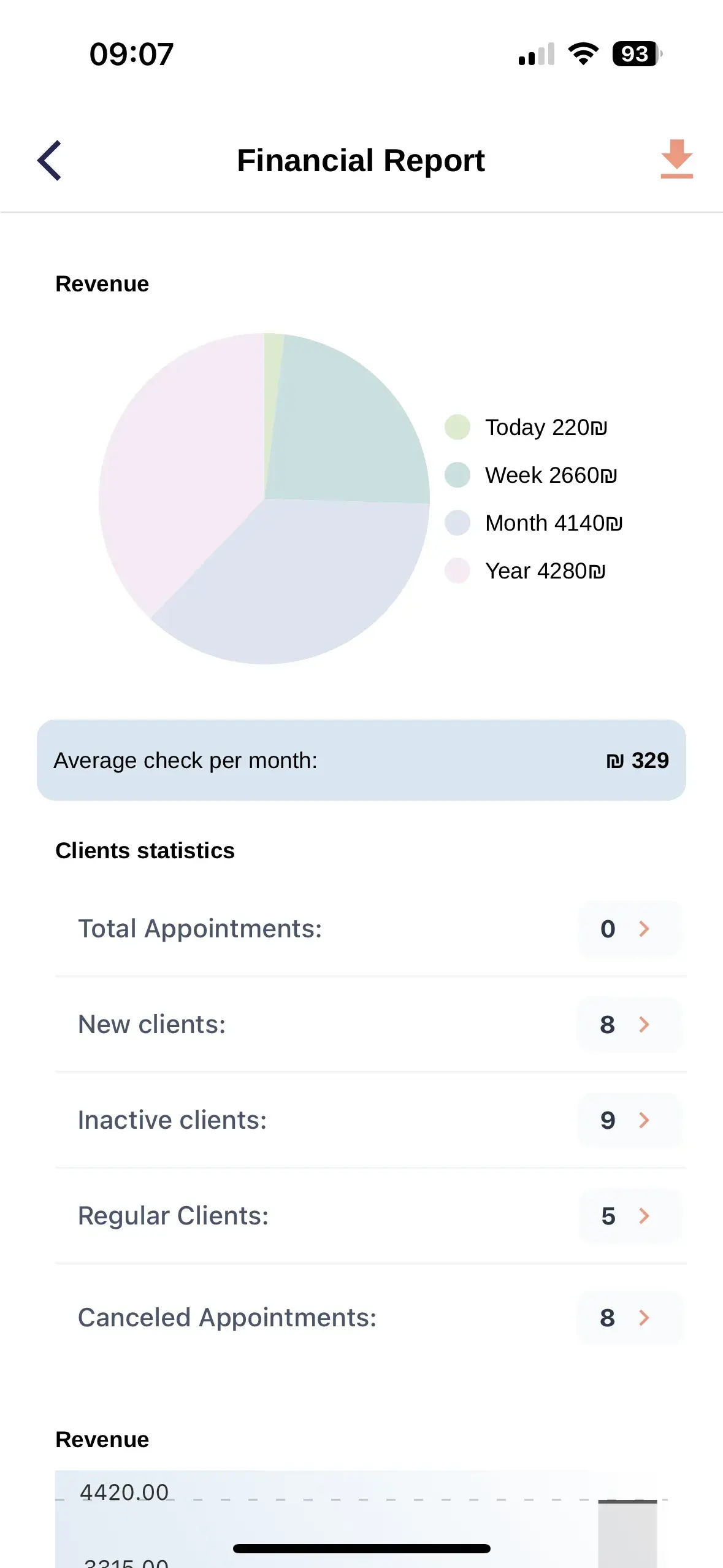
The summary combines financial results for the selected period. Compare income and expenses, review profit and debt, and check product sales separately.
Main indicators
Overall result for the selected period
Revenue
Paid amount from completed services and sales
Expenses
Recorded business costs for the period
Profit
Revenue minus expenses
Average receipt
Average amount of one paid transaction
Services and shop
Separate statistics for services and products
Services
Total amount from completed services
Shop revenue
Income from sold products
Product quantity
Number of product units sold
Product average receipt
Average shop purchase amount
Money and debt
What has been received and what is expected
Current money
Amount actually paid
Planned money
Expected amount from future appointments
Average receipt
Average result of a paid appointment
Debt
Unpaid appointment amounts marked with the Debt method
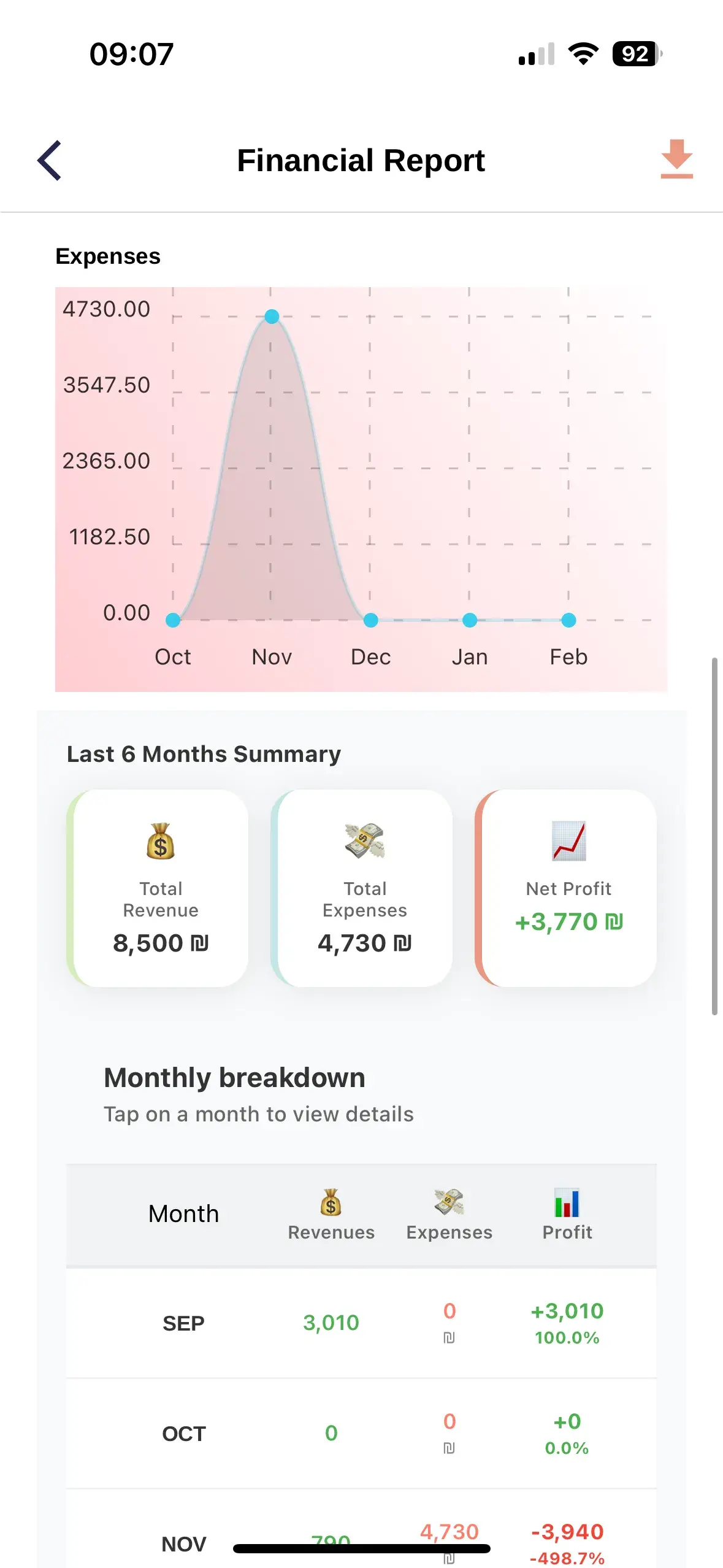
Monthly comparison
Month
The period represented by the data
Revenue
Income received during the month
Expenses
Monthly business costs
Profit
Revenue minus expenses
Change
Growth or decline versus the previous period
Popular services
Period
The analysis interval
Quantity
How many times a service was completed
Revenue
Income generated by the service
Comparison
A table comparing service results
How to analyze the summary
- Select the required period
- Review current and planned revenue
- Compare revenue with expenses
- Check profit and debt
- Review services and the shop separately
- Compare the average receipt and popular services
- Compare the result with the previous period
What to watch
Revenue growth
Check whether growth came from services or the shop
Expense growth
Find the categories that affected profit the most
Product sales
Compare quantities, revenue, and average receipt
Debt
Review unpaid appointment portions and their dates
Review all indicators together
High revenue does not always mean high profit. Compare services, products, expenses, and debt over matching periods.